15 years at LSCC

One of my first leadership meetings at the church (2010)

Fifteen years ago today, I joined Living Stones—known then as Great Exchange—as their pastor. But that change of name/affiliation cannot fully capture the adventures God has led us through.

The week before we began, I found out that I was joining a church-in-emergency. Since then, our church has gone through no small share of trials and tribulations. These last 15 years have included some of the hardest years of my life—as well as some of the most rewarding and fruitful ones.

In every valley we’ve been through are two sets of stones. The first are tombstones, where we’ve laid to rest ideas, idols, illusions that we thought were vital, yet were never of God in the first place. Between church planting culture and Silicon Valley, there is a lot that God must prune before we can grow. But the second set are standing stones, ebenezers, that testify to the unshakeable grace, deep-running faithfulness, and stunningly good purposes of God. I am so thankful for all our peaks, but I/we wouldn’t be who we are today without our valleys too. God, I’m not asking for any more though!

We’ve been in a season of blessing now for about 6 years. Our dream of being a Jesus-like presence here in the ‘burbs is far from realized, and yet God has blown me away by the fruit, the love, the missional zeal in our people. I honestly don’t think we are leading much differently than we did the previous 6 years; I mean the vision is the same! God just has his own time. I don’t take any of this for granted. It is nothing but grace! 

And while I am excited about the dreams we have for the next 6 years, I know it will still all be dependent on God’s grace.

Thank you, Living Stones (and especially all you OG GrXers), for letting me be your pastor, for letting me learn how to lead and how to be more like Jesus with you. Thank you for loving me and my family, for discipling my kids with me, for dropping off meals, for introducing me to craft beer. Thank you letting me into your life, into your dreams, into the places of deep trust; seriously—I don’t take this privilege lightly. Thank you for forgiving me when I’ve messed up. Thank you for teaching me and investing in me. Thank you for still being down to journey with me towards God’s Kingdom together.

Thank you also to my wife, YuYin. We are so different. And yet, 15 years ago, when we found out we were joining a church-in-emergency, who said God ain’t sending us anywhere else? YuYin. When I had to burn the candle on both ends for years on end, who took care of everything? YuYin. And who still works a boring office job to support our family even if we all know she’d rather be caring for family or running a Hello Kitty store? YuYin.

Thank you also to my 3 boys. You never chose this adventure; in many cases, you bore the greatest sacrifices for our church by giving away your dad all those nights, weekends, etc. My love swells into pride as I see the young men you’re becoming.

God willing, he will give me another 15 years (or more) here. But however much time he gives, however he leads, I will count every day as a grace.

——

My bio & intro letter to GrX (2010)
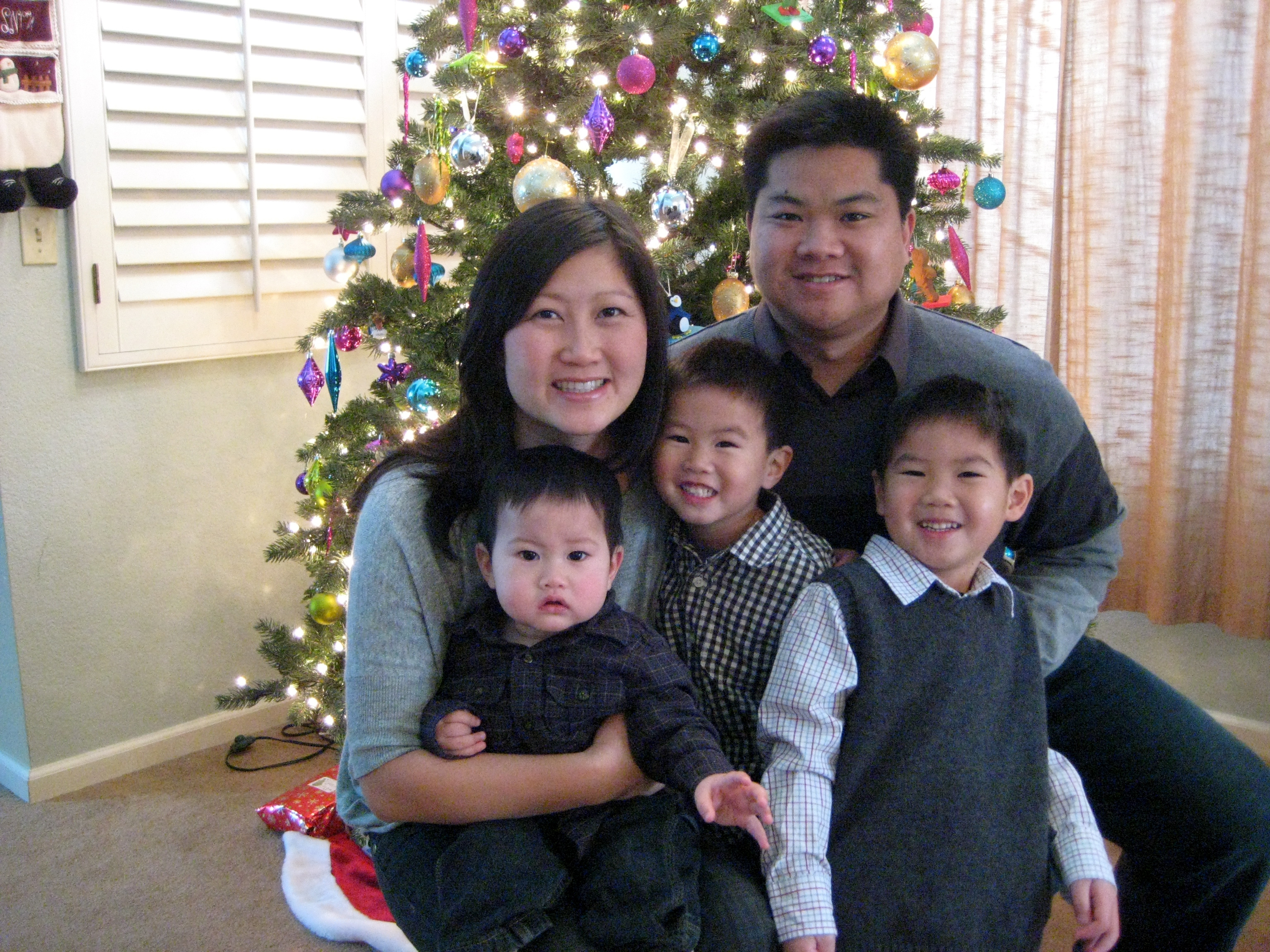
I swear, I’m not playing chubby bunny (2010)
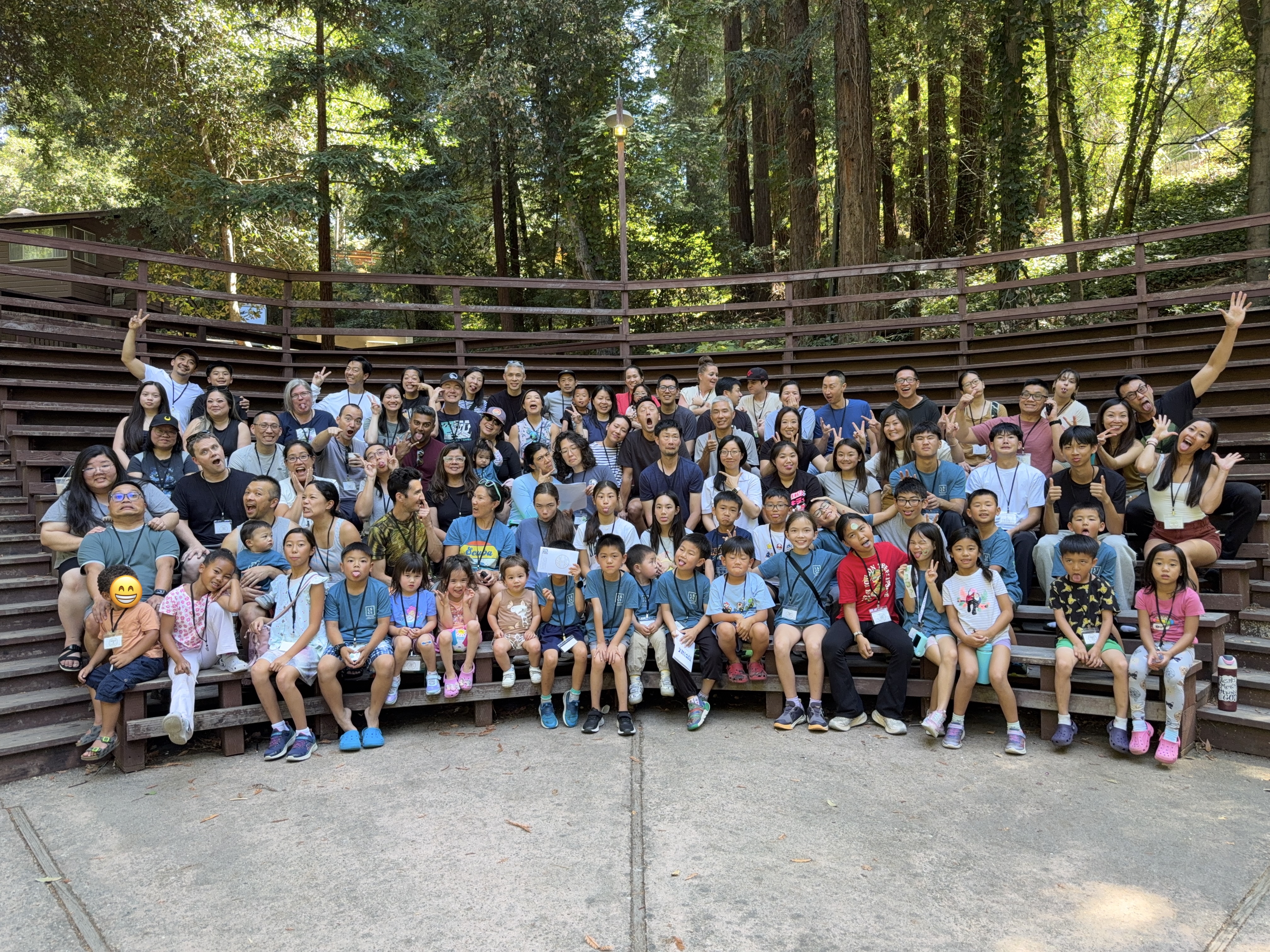
Church Retreat (2025)
Insufficient 

Yesterday, we bore witness to horrific videos of Charlie Kirk being shot while speaking at UVU. How awful for him and his family. How awful for our country. 

But I have found so many reactions — including my own, to be insufficient. 

“This means war.” Obviously, this reaction from the far right is deeply troubling and will only lead us to reap more of what was just sown. 

“He deserved it.” This only further codifies the literal hatred, polarization, enemy-ification that has become what feels like an intractable reality in our country. And it just feeds the “this is war” stuff. 

“Killing someone over a disagreement is wrong.” YES! And yet, this seems to miss that this wasn’t just two dudes having a private disagreement. And somehow lets us all off the hook. 

“Please pray for his family.” ABSOLUTELY. I can’t imagine his family seeing him murdered like that. And yet, if that is all we say, we perhaps miss that Kirk was more than just a husband, father, etc. But himself a key participant in the very things that have made our country such a politically energized but also volatile place. 

As Habakkuk once said: “Must I forever see these evil deeds? Why must I watch all this misery? Wherever I look, I see destruction and violence. I am surrounded by people who love to argue and fight.” Habakkuk‬ ‭1‬:‭3‬ ‭NLT‬‬

But I have struggled too. What do I make of all this? How do I respond? Everything has felt like only half true, at best. Everything woefully insufficient. 

I just know this was wrong. But I also know, given our political climate, this was shocking but not entirely surprising (think of the political/ideological shootings in the last couple years, another school was shot up yesterday too). I know we’re gonna  sadly see more. Thank God, I don’t have to always know what to pray.

Researchers say that what we are in now isn’t just around a couple of bad actors, but an ecosystem of political violence. Some factors include: hyper polarization/extremism (which I think may be due to finding our identity in certain ideologies, sides, or figures – fed by online algorithms), media “outrage industrial complex” (how many times have we been fed this borderline R rated video?), grievance culture, conspiracy theories, loneliness and isolation, access to guns. 

When I see a soil such polluted, what comes to my mind are the words of the Apostle Paul: “Do not be overcome by evil, but overcome evil with good.” Romans‬ ‭12‬:‭21‬. These weren’t trite words, he says this after talking about how to respond to your enemies. 

While not the most inspiring, what I know for now is – church, we may not be able to change/fix all this right now (was that ever our job?), but I know this: We can do the OPPOSITE of all those things that are poison the ecosystem of our nation. We can SUBVERT evil with good. As a counterwitness to this awful state of affairs.

Fight extremism with humble listening and rooting our identity in Christ. 

Fight the media outrage industrial complex by turning it off. 

Fight grievance culture through a culture of reconciling grace (which means resolving conflicts). Speaking truth with love.

Fight conspiracy theories with a love for the truth. 

Fight isolation with embodied community (again, hard).

Fight guns with … well, refusing to arm ourselves. 

Insufficient? Probably. But perhaps we can stand as a witness to an another ecosystem. 

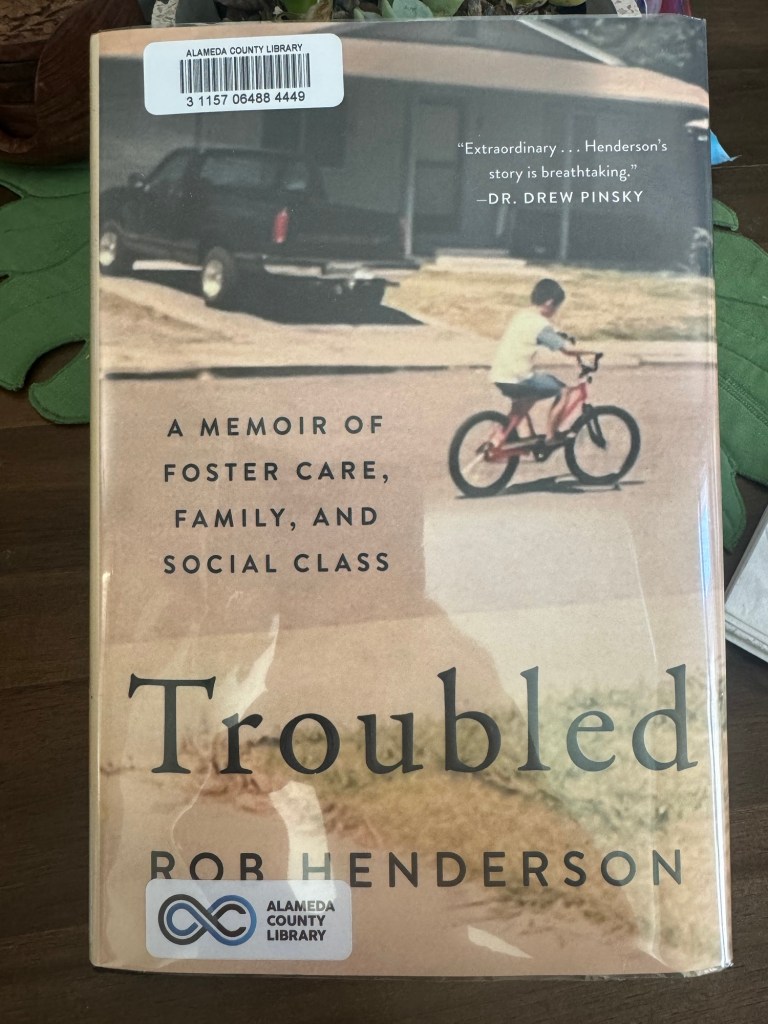
Review: Troubled, by Rob Henderson

“When educated Americans discuss what’s best for kids, we tend to talk about education as the be-all and end-all, when it should be seen more as the fortunate benefit of a warm and loving upbringing.”

I didn’t expect to, but I devoured Rob Kim Henderson’s memoir in 2 days — a story about a foster child, and his observations about family and social class.

Much of the book is about the traumatic instability of being a foster child. He remembers being ripped from his mother’s arms by the police. She was an addict, sent back to Korea. He never knew his Latino father. From there, he was moved from one foster “family” to the next—9 in total—never getting the stability he craved.

Eventually, he was adopted by a poor working class family, in Red Bluff, CA—a small, also poor, and dangerous town. But like most of his peers, dad left, and, like his peers, Rob accelerated his life of drinking, smoking, fighting, thieving, and truancy. He did love reading though. This sobering portrait of growing up as a foster child in poverty alone is worth the read. Most of his friends now are barely in relationships, barely employed, in prison, or dead.

But Rob also has something to share about class. Rob eventually “got out”—a statistical miracle for a foster child. He joined the military, excelled, got help for his alcoholism, and was then accepted into one of the most elite institutions in the world: Yale. From there, Cambridge.

But Yale was a curiosity to this adopted foster kid from poor Red Bluff. First, almost everyone was from stable, intact, and well-educated families. Second, when a campus protest broke out over a professor’s email about the school’s Halloween costume policy, these very privileged students spoke of the being “triggered” and deep “harms”—when he asked to understand, he was told he was too “privileged” to understand, presumably because he was half Asian (or looked white?).

But third, he came to observe what he now calls “luxury beliefs”—beliefs that confer status on the elite, but on the backs of the poor. In the past, Rob says, the rich could signal their status through luxury cars, clothes, etc. But the middle class can have all that now. So today, they signal through luxury beliefs. This is where Rob steps on some toes. “Defund the police” for example, is easy to say for his wealthy classmates who live in relative safety. And yes, he says, the poor are more likely to be incarcerated, but they’re also overwhelmingly more likely to live in neighborhoods most susceptible to crime. Or decriminalizing drugs, a harmless recreational activity for the rich, but the road to destruction for the poor. But, most personally for Rob, the deconstruction of marriage and family. Most of his peers advocated things like polyamory and called marriage “just a piece of paper” (something, he says, they don’t seem to apply to their Yale degrees). But he, and most of his friends in Red Bluff would’ve traded the world to have a stable two-parent home. And when he asked, nearly all his Yale friends planned to be in a monogamous marriage themselves one day. He thought his fellow Yalie’s would use their privilege to help the poor, to the contrary – they used the poor to bolster their own privilege.

In the end, we are all searching. Status, belonging, love. The middle class, he says, seek status through education. This speaks to me and my cohort. But he closes the book with a conversation with a parent, asking how their child could grow up to be successful like Rob. “Should we read to our child?” they ask.

“Yeah, but not because it will expand his vocabulary. Read to him because it will remind him that you love him.”

What Progressives Get Wrong About Race

While the error of well-meaning conservatives is color-blindness (there is no racism), I believe the error of well-meaning progressives is making race everything.

Yes, racism is part of the ‘matrix’ of American society. You cannot know me without knowing my ethnicity and how I have experienced my race. But my race or even ethnicity is not the truest thing about me. Celebrating AAPI Heritage Month, for example, doesn’t do a lot to help me feel ‘seen.’ Honestly, I don’t know many Asians who even care about AAPI Heritage Month (or even know when it is…do you?). Most of us feel more at home when celebrating holidays like Lunar New Year, Diwali, or *gasp* Christmas!

This is what makes me cringe at times when progressives try to be ‘inclusive.’ What this usually means is including people like me simply because of my race. For Asians, this is deeply problematic since “Asian” (or its much worse “AAPI”) is a patchwork umbrella term for 60% of the world! How am I, a Toisanese American supposed to represent all Asians on this team, panel, or social media post?

Progressives thus end up reifying race, hardening the very racial categories that they purport to break down! Racial diversity thus becomes a convenient way for progressives to claim to be antiracist without really having done anything to challenge the construct of race itself. To put it another way, antiracism can become a way of perpetuating the logic of race!

What folks often forget about race is that it is not primarily about skin color or culture, but a logic that justifies inequality and oppression. What good does it do, for example, when Harvard boasts about its racially diverse class, when the “underserved races” included aren’t poor rural Black or Salvadoran DACA youths, but Nigerian royals or sons of Argentinian diplomats? Race, thus becomes a way for progressives to further burnish their elite credentials (think: diversity is the new Gucci bag), again, without doing anything meaningful about the inequality that race justifies.

This is why I’m with Jesus on this one, who came preaching “good news to the poor.” And the Apostle Paul who gave his life for this gospel: That Jesus’ death and resurrection broke down the dividing wall of hostility between Jew and Gentile (aka ‘race’), but also between slave and free (aka ‘class’). We cannot understand the power of race unless we center the concerns of the poor. To put it in antiracist terms, we must tend to the space where race intersects poverty, with greater emphasis on poverty. Because ultimately, race is how we justify poverty, violence, and oppression. This is why, while well-educated Asians like me have every reason to decry violence against our elders and sisters, because violence is oppression, that notwithstanding, we need to check ourselves when it comes to things that mostly concern the elite: Hollywood representation, bamboo ceilings, and Harvard admissions; there are plenty of Chinese and Koreans represented, but many less Cambodians, Fijians, or Hmong. On the other hand, it’s one thing to raise my fist for #BlackLivesMatter at an NBA game, rooting for some of the wealthiest and most celebrated Black men in the country, quite another thing to work with our community, local police department, and DA to do something about mass incarceration. We remember MLK Jr. for his fight against racism; but less well-known is that a year before he was assassinated, he was preparing for his next chapter against inequality: “The Poor People’s Campaign,” a 2,000 person march on DC of the poor walking peacefully for jobs, unemployment insurance, a fair minimum wage, and education.

I used to think that those who said, “It’s not about race; it’s about class!” were guilty of skirting the reality of race. And maybe that’s still true. But I now realize those who only focus on race are ignoring the evil that race enables: poverty.

To learn more about a multi-racial coalition against poverty, I suggest The Sum of Us: What Racism Costs Everyone and How We Can Prosper Together. For a theological treatment of the same, I suggest Asian Americans and the Spirit of Racial Capitalism. For a tortured-soul critique of Asian progressives, I suggest The Loneliest Americans.

Sending our firstborn off to college

This past Sunday night, I gathered Caleb’s spiritual elders and mentors to send him off with wisdom and blessing.

YuYin and I could not share our words without tears. God, it’s so hard to let go…even if I know I am giving him over to his Heavenly Father.

I’m so grateful for the village that’s helped us raise Caleb. But this poem, written by Christina Huang, who has been like another mom to him—whom he and his brothers have always called “Tina” because they couldn’t pronounce her name as toddlers—is everything.

For Caleb
You were the first one
First son of the first son who,

By my estimation, was an Asian American Christian, trying to follow Jesus more than Confucius

First patient in,
Ground Zero for hopes
That the Hope I had chosen would not put me to shame
Because I was already bearing the pain of leaving family behind to follow Him.

Test subject #1
For experimentation, prayerful application of Gospel and Truth
To prepare you from your youth to become a man in love with the Living God.

You were the first one.

Now you have been chosen in all privilege and power
To arise and go, to spy out the land,
To come back with a branch of fruit in hand
And confirmation that what He has promised is good
Is amazing
Beyond what we could ever imagine
More than what our weary hearts can fathom
So that courage is renewed
Longing, Fortitude
Vision imbued with creativity
Of what Kingdom looks like through Caleb Hui
With CRT, slam poetry,
A hunger to learn as many created things as possible.

We are sending you out as the first.
Gird yourself with The Word,
Fellowship, patience,
Oatmeal, knee braces,
Humility, kindness
That you may spy with heart, mind, and eyelids wide open.

Go then.

And call your mother every day.

Love,
Tina
08/13/23

On the Overturning of Roe v. Wade

[CORRECTION: Outlawing abortions *do* reduce abortions, at least by 10%. Not as much as one would think, but not immaterial considering how many abortions are performed in the US. But the remaining 90%, and the well-being of children who are thankful brought to term? I still believe a wholistic/re-centered approach as I wrote below.]

I feel deeply mixed about the overturning of Roe v. Wade.

I believe that our lives are a Divine gift. Christ showed us that the ultimate act of love is to *give* our lives for others. Only the Giver of life has the right to take it back, but the State/Empire is always trying to usurp this right from God for its own purposes.

This is why I also am deeply skeptical of waging war—and our widespread use of drones in undeclared wars. Why I oppose the death penalty. Why I believe in reimagining public safety. Why l’d love to also overturn DC v Heller (which turned the 2nd Amendment from collective to individual right), and end immunity for gun manufacturers. Why I support vaccines. Why I believe we must bolster support for maternal and early childhood health and flourishing, especially for working moms and the poor. Why I believe we must improve the communal discipleship of young men. Etc. Support life from ‘womb to tomb’, some call it.

Studies show, however, banning abortions don’t really reduce abortions (correction: reduces by at least 10%). Who knows, this ruling may even speed up the normalization of the most inconspicuous type of abortion: via pill. Also, I am deeply opposed to criminalizing women for making a choice that, for many, doesn’t feel like much of a choice—especially if men will not face the same consequences.

What may make a bigger difference is if women didn’t feel they had to choose between their partner’s love v their child, a job/career v a child, raising a child in poverty v a child with strong support, raising a special needs child alone v with the affirming dignity of family and social support.

What will happen next is anybody’s guess. Most likely, we will all continue to become casualties of this never ending culture war.

I pray, however, more of us will center the flourishing of lives and livelihood over ’winning’. Bending towards the most vulnerable rather than conforming to worldly power. And cultivating families, churches, and communities of such strong love that any member can envision raising children within them.