As a (non-white) evangelical pastor, it’s not uncommon for me to see stuff on my feed about “how Christians should vote.” But this is actually a strange and complicated question. Let me rattle off a bunch of reasons:
1. Voting was not even in the imagination of the early believers. Christians, like most people in those days (and most people today!) didn’t choose their rulers. Most people in history were slaves or peasants.
2. Not only did Bible-time Christians not have the right to vote, most were persecuted; the opposite of political power.
3. Around 300 AD, when Christians finally got political power by some wacked stuff that happened to the Emperor Constantine (He saw a vision of the Cross leading him into battle—which, guys, the cross was how Jesus was killed, not how he will kill others! Hence: whacked), the Church lost its identity and we ended up with fancy clergy and churches and crusades. That’s why people became monks, to disconnect from the system.
4. There are really just two types of passages in the New Testament (NT) that speak about the rulers.
4.1. Those that ask us to pray for peace and live lives of peace. You can tell these guys were living under hostile governments. The idea is: If there is peace for everyone else, there will be peace for us and peace for the gospel to flourish.
4.2. Those that are critical of rulers for being cocky, oppressive, and persecuting. But even for these people, the idea was never “vote them out of office”, because, again, that didn’t exist. Instead, prophets wrote poems for the people to recite that promised these rulers would one day meet their Maker. Most Christians believed that justice was out of their hands (they had no power), but that the God of Justice would one day make things right.
5. The NT never thought about how to establish a Christian society (whereas the OT did, a Jewish one). The NT was about strengthening a viral network of tiny little living room societies, called churches, who were a part of something much bigger: God’s Kingdom.
6. The clarion call of the NT is not whom we should vote for, but simply that Jesus is Lord. And in a world that said Caesar is Lord, it’s no wonder the early Christians were deemed disloyal and even unpatriotic.
—-
With the above in mind, I think we need to be much more humble and honest about the reasons for our vote.
Christians, most likely, you are voting the way you vote because of where you live. Or because of the media you consume. Or because of your demographics. Or your education. Or just because you’re liberal, moderate, or conservative. Not purely because of the Bible. If I’m honest, that’s true for me. Check it.
We are just as prone to voting for self-interest as anyone else. Check it.
At our best, we vote as an expression of loving God and loving our neighbors. But in reality, it’s not always that clear which is the more loving choice.
And there’s always the law of unintended consequences. Politicians lie. Or discover governing isn’t like campaigning. Or laws look different in practice than on paper.
I believe we should take our votes seriously. I believe as members of a democratic society, we should do our best to build a better society. I believe we should debate. And I do believe (collectively), our votes can make a difference. But as the late Rich Mullins once sang, “O, we are not as strong as we think we are.”
So I believe, if we want to take a biblical perspective, these three things remain:
1. Pray for peace and live like it
2. Love your neighbor like a Good Samaritan
3. Seek God’s Kingdom first
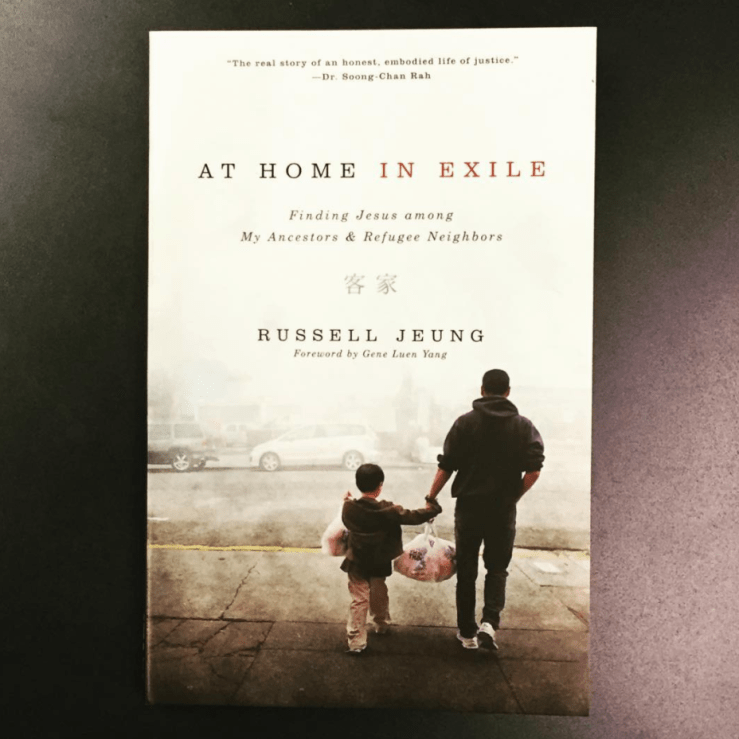
This is a truly unique book. And the best book I’ve read this year. Part memoir / sociology / theology / Asian corny hilariousness. It’s funny, it’s educational, it’s deeply moving.
Russell moves into and ultimately finds home in the Murder Dubs of Oakland. But it’s not a triumphant American superhero story. Nor is it a sappy romance about ‘the poor.’ It’s a complex, humble story about how he found community, identity, and ultimately Jesus in his mostly Cambodia refugee & Latino neighborhood.
It’s a story that asks: What if Jesus wasn’t as much an American superhero, but more like a Chinese Hakka exile (his ancestors)? What if Jesus was more like my Chinatown grandma than that powerful hipster pastor I’m always jealous of? He re-explores things like MISSION, JUSTICE, COMMUNITY, FAMILY & CALLING through this lens.
I finished this book richly proud of my Chinese ancestry, broken over the plight of disenfranchised non-model-minority Asians in the Bay Area, hopeful about what God is still doing through amazing yet mostly “invisible” people, but challenged to live my faith in a way that may run counter to the power and reward structures of our world.
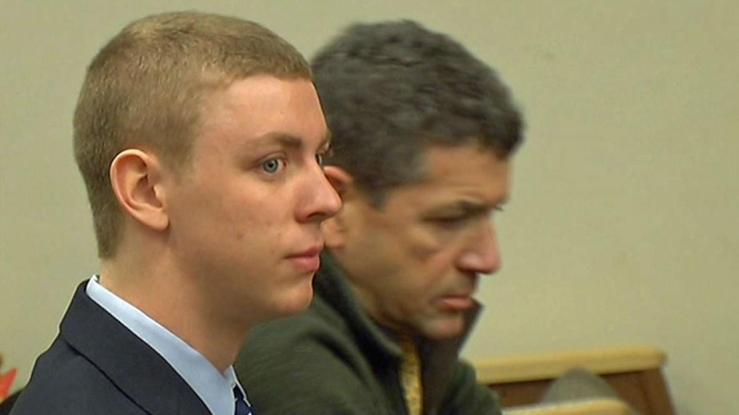
I’m not wise enough to know if recalling the judge is the right thing to do. Mob justice feels right, but it also make me wary. That decision is up to you (read debate by law profs).
But what I do know is that the situation, the case, and the future falls on people like me. And by me, I mean a man. By me, I mean as a father of three boys. And if you’re white, it triply applies to you. And the responsibility ahead is a lot harder than signing an online petition.
First of all, if I had a daughter, I’d spend as much time making sure my daughter stays away from college drinking as you’d want them training for jiu jitsu. Not because if you drink and you get raped it’s your fault; it’s NOT. But for the same reason I’d say stay away from any behavior that dramatically increases your chance of getting assaulted: 80% of campus sexual assaults involve alcohol. Staying away from college drinking as a woman is just good self-defense. (Update: I learned the woman was 23 and not a student, so would’ve don’t nothing for her. And again: rape is always 100% the fault of the rapist.)
But I don’t have a daughter. I have three boys. And I believe it is incumbent on people like me to raise boys that not only stand up against rape culture, but perpetuate a better, safer, and more dignifying culture; a culture that I believe Jesus exemplified among men and women. And he put the onus of perpetuating that new culture on those with power, those with leering eyes and erections.
Which is why I’m writing about this. Because it’s not just women who should be speaking up, but equally, men. And thank you, sisters, for speaking loud enough so our deaf ears can hear.
Which is why I feel doubly committed to raising boys:
…who know they are unconditionally loved by God and us — so they don’t feel the need to fill some void with power, sex, or accomplishment.
…who develop a strong, healthy, and holy masculinity — so they are aware of their power and use it for good and not their own pleasures.
…who live in a rich network of relationships with God, family, church, and friends — so they have help during their seasons of rejection and insecurity.
…who are self-aware enough and rooted deeply enough in the Jesus story — so they are able to at least have a chance against a media culture that now objectifies women 24/7 on every screen through Michael Bay movies, Snapchat, beer commercials, and pornography. Because as a person who came of age at the beginnings of hi-speed internet and smartphones — guys, it’s not a fair fight.
…who respect all people, especially women, in public and in private, as just a baseline level of morality.
…who hate cheap alcohol until they hit their 30s and discover tasty craft beer that is too expensive to get drunk on like their Dad did.
…whose anger is well calibrated with the anger of Jesus.
…who do the right thing like the two nameless Swedes did when they saw Brock on top of the unconscious woman.
…who, along with other women, preside over campus clubs, social groups, ministries, workplaces, homes, neighborhoods, and cities that exist for the safe flourishing of all, not just themselves.
And which is why I try to remain honest, humble, and broken about when I fail to exemplify these things myself as a man, husband, father, pastor, and public citizen — because I do fail — but humble enough so I can change and become at least what I pray for my boys to become. And like all parents, I pray that they will become more. For ourselves, for my wife/their mother, for your daughters, and for the glory of God.
UFC’s Jose Aldo, weeping in his locker room, after his crushing 13-sec loss. He was undefeated for 10 years until December.
As someone who only really started to get into both watching and playing a sport these last couple years, I’ve come to realize why athletes and coaches so often compare sports with life.
In the sports I watch, losing has been one of the predominant themes this year. In boxing, Wladimir Klitschko, who has been the reigning undefeated heavyweight champ for 10 years—lost in a stunning upset to Tyson Fury. In MMA, the invincible superstar Rhonda Rousey got taken to school by Holly Holm; longtime champ Jose Aldo was KO’ed in 13 seconds by Conor McGregor. And the championship Niners I grew up with are currently tied with the Cowboys for last place in the NFL.
Perhaps these losses speak so loudly to me because I have felt the sting of loss more than once this year. Not the losing of loved ones, as I know some of you have, but the losing of battles. Some of the losses are a little too personal to share, but suffice to say, they are battles I’ve lost in my work, in personal relationships, in my spiritual life, and in my journey to pick up boxing at the same age most boxers retire.
One of my favorite TV characters of all time is Coach Taylor, of Friday Night Lights fame. And in the midst of a 26-0 shellacking, Taylor gives this storied locker room speech to his team during halftime:
Every man at some point in his life is going to lose a battle. He is going to fight and he is going to lose. But what makes him a man is that in the midst of that battle he does not lose himself. This game is not over, this battle is not over.
When a new year comes around, we usually look for that fresh start. But as a wannabe athlete…and mostly as someone who is now squarely in my adult years, there are rarely true fresh starts in life. Nor should there be. You can’t push the reset button in between rounds or during halftime. In real life as in sports, you must continue to fight. And even once this fight is over, the next one is just around the corner.
And while winning and losing does matter, it is not what ultimately matters. Most athletes, especially in fight sports, will tell you that the real battle isn’t with your opponent; the real battle is within yourself. Will you lose yourself in the face of this contest? What will be revealed about your character? And even if you end up losing, will you let that loss change you for better, or for worse? What makes him a man is that in the midst of that battle he does not lose himself. Even after we’ve left the ring or the field, this game is not over, this battle is not over.
And even if you ended up winning the game, it’s still possible to have lost…yourself.
As I enter into this new year, my losses are not far behind me. Some of them, I am still in the middle of experiencing. But the invitation that God has been giving to me at this threshold isn’t an invitation to a fresh start, but to keep fighting. And not just in the external battles of life; in fact, the invitation is more so into the internal struggle. Will I lose myself? Will I sacrifice my character, my values, or even my loved ones for the win? Or will I remain true? Will I grow? Will I allow the crucible of battle press and refine me to become the man God sent his Son to die for me to become?
With God’s grace, I sure hope so. We’ll see in 2017.
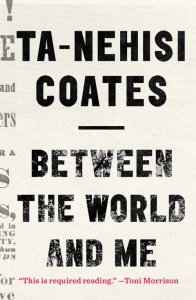
I recently finished Ta-Nehisi Coates’ memoir, Between the World and Me. I expected to come into a deeper encounter with the experience of being black in America—and I did. But what I did not expect was to come into a deeper awareness of my love and responsibility for you.
See, Coates is a journalist and a brilliant writer. He recently won a Macarthur Genius Award. But this book, although a memoir, is written to not only to convey his story, but also his love for his one and only son. By birth, Coates was thrust into the chaotic streets of Baltimore, where even his loving, unreligious, but strict home were living legacies, the ongoing fall out of the subjugation of “black bodies.” He went to Howard University, a historically black college, and found a safe place to explore the full spectrum of blackness. Yet even there, was reminded ‘safe’ is a relative word when one of his friends—a young man who turned down Harvard for Howard, whose mother was Chief of Surgery, a man who was bound for success—was shot by a police officer. Coates met his wife at Howard too—another black person, similar but different from him. They travelled to Paris and experienced not only a sense of foreignness by geography, but also because of they were no longer viewed as especially dangerous or suspicious, i.e., black; he felt like a fish out of its water; and even if that water was poisonous, it was familiar. But then he had his son. Not born into the same chaos Coates knew when he was young. Yet he saw how his boy, born into a new era, could so easily be pushed aside. He saw how his son ran into his room to weep when he saw Michael Brown lying in the middle of the street on the TV. And Coates realized that as far as he’d tried to struggle and live well into being a black man in America, that he would not ultimately succeed if he did not pass the baton to this son whom he loved.
I have not been the worst father, but I have not been the best either. It’s not fair to you guys that the person who is responsible for fathering you is still working out his own identity, his own insecurities, his own imperfections, his own demons. It’s not fair to you guys that Daddy isn’t perfectly selfless, that Daddy is still learning to be Daddy. I didn’t grow up on the chaotic streets of Baltimore, but I did grow up in confusion. I grew up in a loving Toisanese family, but felt embarrassed by them at school. I grew up in a world, that still makes me feel unwelcome. I look back with shame at how, in struggling to be an American teenager, I disrespected my hard-working immigrant parents and made them feel hurt and rejected. But, also unlike Coates, I found God, or better put, Jesus found me. And things have been changing. And the world continues to change too. But not that much. Even as an adult, even as someone who’s been following Jesus for over 20 years now, I am still someone who is just beginning to grasp the edges of self-knowledge, and far from self-mastery, and even further from Christ-likeness. Yet this is the Daddy you have.
There’s a part of me that wants to apologize. And I do. But what all of me wants to do is love you. And by love you, I do mean hug and play with you. I do mean teaching you ride a bike and run a route. But I also mean teaching you what I’ve learned about life, about being a Chinese-American Christian man. And ultimately to be better than Daddy. Because by default, you will be no better than me.
One day, you will read the Book of Proverbs and Ecclesiastes, and you will at first think they are wise pithy sayings. But eventually you will learn that these are hard wrought lessons of a king to his sons, the future kings of Israel. And that’s what you are. You are my princes, you are the future kings of this world—even if the world will not have you. And I promise to not only father your strength, but also your mind, heart, and soul.
I can’t breathe
The unbearable weight of history
Of subjugation, segregation, stop-and-frisk-ation
Boring down into my back
Crushing my chest
Strangling our souls
Let me tap Uncle
I will let you win
I will surrender my cig
If you will just let me breathe
Now beneath the weight of dirt
I’m waiting for justice
I can’t breathe
The loss of another
Son of a mother, a father, a brother
This shitty record is broken
Injustice rolls like a motherfuckin waterfall
Away with the noise of your songs
I can’t listen to the music of you harping on
Why won’t you just stop and frickin listen?
Now beneath the weight of your laws
We’re waiting for justice
I can’t breathe
I’m choking on these fallen tears
I can’t breathe
I’m exhausted from the fight
I can’t breathe
I’m holding my breath
Because if there is no Advent
There can be no justice
If there is no rising again
There can be no peace
Just the status quo
Holding up the weight of the world as we know
And we will be waiting for nothing
But as for me
I will walk
A prisoner of hope
Waiting for that sigh of relief
Waiting for justice
UPDATE: Evan just told me that Jared walked up to him today on the playground. They shook hands. Jared said sorry. Evan said sorry. They went back to playing four square. Why can’t all our friendships be this simple?
—————————–
My 7 year old son, Evan, got into his first school fight yesterday. Like most school yard fights, it was mostly inconsequential. But it was a rite of passage for me as a father. (Why wasn’t this a rite of passage for him? Well, my son spars all the time — he is a scrappy but budding martial artist at our gym, Dragon’s Den.)
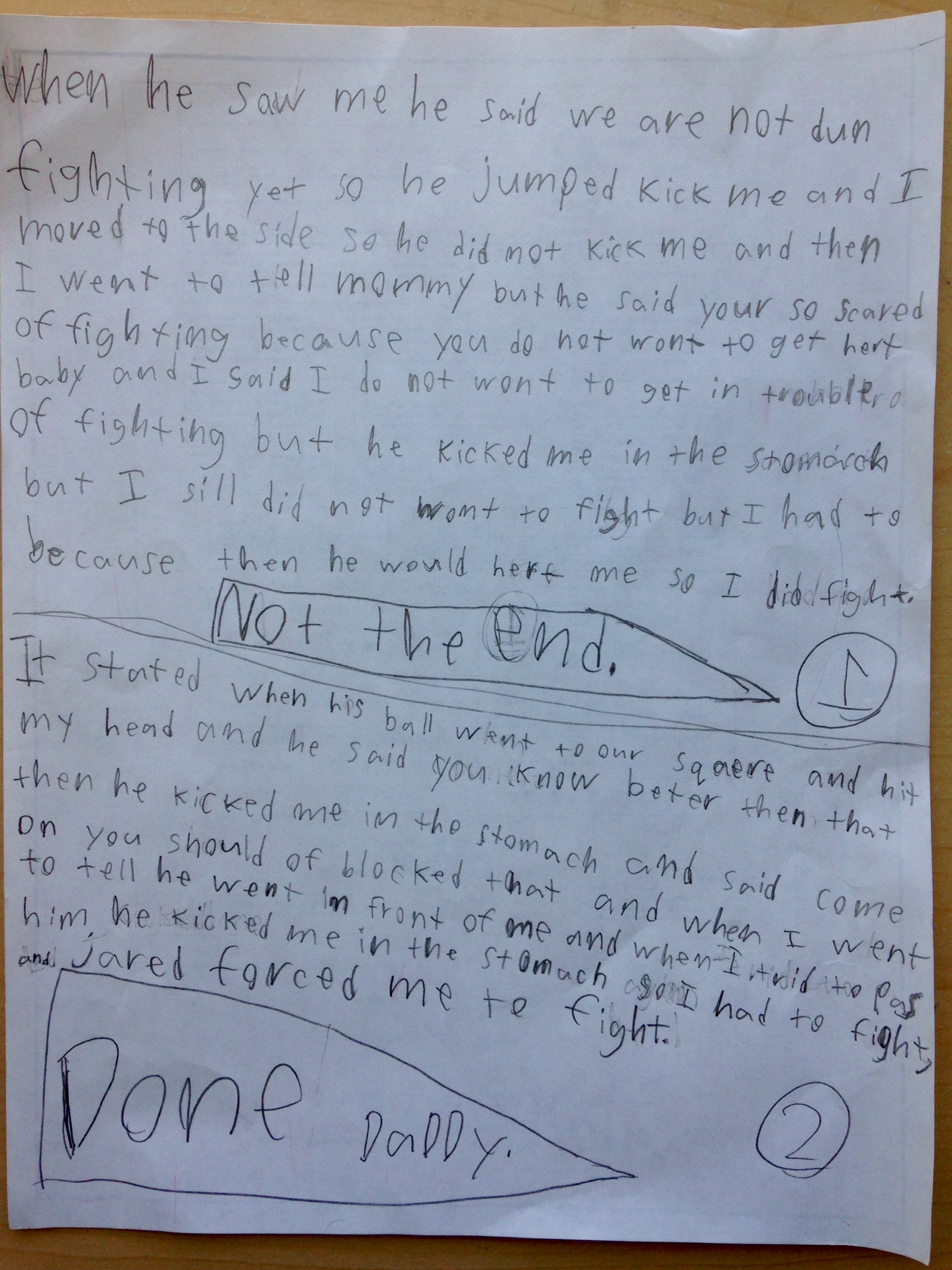
My first reaction, when my wife called, was disappointment and anger. We teach our kids not to fight (note: they’re always fighting each other). We teach self-control and good character. We teach peace. We teach them to be like Jesus. But rather than react, since he was emotional too, I asked him to write me a letter. “We’ll talk when Daddy gets home.” This is what he wrote me:
If Evan is to be believed — and in this case, I do — the boy, Jared, was just your classic bully: a 3rd grader trying to intimidate a little 2nd grader.
(1) The altercation began the day before, on the wiley grounds of the four-square court; Evan tried to tell an adult but Jared, stopped him.
(2) Next day after school, he approaches Evan, “We are not dun fighting,” and jump kicks him. Evan side steps.
(3) My son tries to tell an adult again, the boy stops him, “Your so scared of fighting because you do not wont to get hert baby.”
(4) My son replies, “I do not wont to get in trouble of fighting.”
(5) Jared responds by kicking and attacking Evan.
(6) Evan gets into his fighting stance and engages (according to my wife).
The topic of fighting is hard. Especially if you lean towards non-violence as I do. On one hand, I want my children to grow up to be people of radical peace, not war, aggression, or revenge. On the other hand, no one wants to see their child get hurt. And then of course, there’s the carnal part I share with most dads: If there’s a fight, I want my kid to beat up your kid (admit it, you do). So I knew that the my conversation with him was going to be pretty important. This is what we like to call a “teaching moment.” Through prayer and thought, I stumbled my way through the conversation, but here’s the gist of what I shared with Evan:
There will always be people like Jared. They have something to prove, you have nothing to prove. Mommy & Daddy already love you. God loves you. And you know who you are.
I am proud that you used your Kajukenbo (his martial art) for good. You side-stepped, you tried to leave the situation, you tried to reach an adult. You showed wisdom and self-control. That is a sign of good character, not that you are scared (he was more scared of getting in trouble for fighting, than fighting itself). Who you are on the inside is more important than what you can prove on the outside.
Mommy & Daddy still never want you to fight. But when someone traps you or forces you to fight, we are not there; you are. We trust you to make a good decision.
The conversation was hard. My son is still young enough to be cute, he has these huge Precious Moments eyes and when he shared about being forced to fight, he began tearing up. At that moment, I wanted to hold him. I wanted him to tell me about how he beat that kid up (I never asked, because who won the fight is not actually important).
At the same time, I wanted to train my son to deal with bullies. People make a lot about bullying today; I was bullied as a kid. But as parents and teachers, we need to realize that we’re not there to stop or protect anyone. And rather than only comforting him, I wanted him to learn from this altercation. And I wanted him to learn how to live real life. I wanted him to be respond like Jesus.
And lastly, I struggled but managed to have compassion on Jared. Because, to be perfectly honest, I know my son could totally take him on. What’s the worst thing that could happen? Evan gets beat to a pulp. What a close second? That Jared does. And despite my protective feelings, I don’t really want anyone to get hurt. I resist the zero-sum logic of If someone’s gonna get hurt, better your kid than mine. Violence is never that cut and dry. And I don’t want my son to grow up with that kind of blood (but mostly snot) on his hands. I pray and desire for peace, not just in the abstract, but even on the blacktop.
If your kids have ever gotten into a fight, I would love to hear how you dealt with it. Or if you ever had the chance to go back in time to talk to your younger fighting self, what would you tell him/her?
This has been a pensive week for me. Ferguson, MO has been on my mind. But more specifically, the ringing challenge of certain Asian American friends who have called the relative silence of their fellow Asian Americans unacceptable, saying we owe a debt to the Black community because of the freedoms we’ve all gained in their fight for civil rights. And while these calls have unsettled me, I have been mulling on their challenge. After all, wounds from a friend can be trusted, right?
At the same time, as a (recovering) news and political junkie, I’m keenly aware that not only are there many sides to a story, but stories are often used to persuade and politicize. This is not new. This is, in fact, the power of story. In fact, I daresay, there is no such thing as a truly objective story.
But thirdly, as I mentioned in my previous post, I am still testing out my voice in the public conversation on race. This is scary for me because I’m prone to not only be misunderstood, but also maligned. As a learner, my beliefs are still fluid. But not all will read my words this way. But in this spirit, here are some continuing thoughts:
I stand by my belief that the race conversation in America, continues to be irrelevant to Asian Americans. Again, I am not saying that racial reconciliation or racial righteousness is irrelevant to us, but the conversation, as it stands, continues as if we don’t exist or belong. We are, predictably, perpetual foreigners to the conversation. E.g., this great article: 10 Ways White Christians Can Respond to Ferguson is addressed to whom? White Christians, not non-Black Christians, but White Christians (I do understand the sentiment though, because White Christians have a unique responsibility in America because of their privileged race). But I think it goes deeper than that, because as Asian Americans, we don’t quite identify with the Black experience or the White experience. Our experience is Other. I think this is why I took such umbrage to the headline: The Unacceptable Silence of Asian American Christians in Response to Ferguson (I realize now that the title didn’t really reflect the actual blog post). Because I felt like I was being co-opted into a story, on the basis of my race – that never truly included me. And this is why, predictably, you see Asian Americans who sympathize more with Brown, others with Wilson, and many others who are Other: they got other things to do. And lastly, at least for me, when I think of race relations, I almost never think of Blacks or Whites – because both have been among the fastest shrinking populations in the Bay Area, my home base. E.g., I have a Black neighbor now, but before he moved in, the family living there was Ghanaian. The two White neighbors I had: a Lithuanian and a Brit. The rest are Afghan, Indian, Filipino, Guatemalan, Mexican, Japanese, and Chinese. The race conversation, re-ignited by Ferguson, isn’t really about this kind of world. The race conversation that is relevant to me is multi-cultural among equally powered peoples, not bi-cultural between unequally powered ones.
As Asians, we’re slower to speak up in general. You might think that is a stereotype – which of course, it is. But I challenge you to have a Bible Study with a equally mixed group of Whites, Blacks, and Asians. You might have one Asian who is always willing to speak up, but more likely than not, you’ll find that Asians wait longer before speaking, prefer to speak in turn or when they are called on, and may go through the whole study without saying much at all. We are less likely to be external processors, more likely to fear saying something that is wrong. And by the time we’ve figured out something worth saying, the group’s already moved on to the next question! We need time, we need space, we need to be asked for our opinion.
Tensions exist between Asians and Blacks too. Wouldn’t it be great if in times of pain, we could just forget the past and just rally around one another? Yes, but that’s not how things always work out. Reconciliation is a prerequisite to community, and right now, there is still too much crap between Asians and Blacks. For example – and I don’t mean to throw my family under the bus here – but I grew up with a fearful and disparaging view of Blacks. It was rarely taught that explicitly, but when you see your parents lock the car doors enough times, pull you in closer enough times when a Black man walks down the street; you hear enough stories about criminal activity or lazy people – and they tend to always feature someone who is African American; you get told enough times that certain neighborhoods are “bad” because of crime, poverty, schools, and oh, there are a lot of Black people living there — eventually, you get the picture (thankfully, my parents no longer share these views — one of the benefits of actually having Black friends). It’s no secret among Asians that our community harbors deep racist attitudes towards Blacks. On the other hand, as some of my readers have pointed out, the experience Asians have had with Blacks has been disproportionately bad. In 2008, the city of SF found that a stunning 85% of physical assaults were Black-on-Asian. In 1992, Korean-owned stores were disproportionately hit by African-Americans in the LA riots — 45%. And in Ferguson, Asian-owned stores were also disproportionately hit. I pray for White-Black reconciliation. But I also pray for Black-Asian reconciliation.
We do owe a debt. Scott Nakagawa outlines “Three Things Asian Americans Owe to the Civil Rights Movement.” (1) The freedom to marry interracially, which Asian Americans are more likely to do than any other ethnic group. (2) The right to vote, which was won for all races. (3) The Immigration and Nationality Act which ended racist discriminatory laws against Asians. Many of us would literally not be here if it weren’t for the sacrifices made by Black Civil Rights leaders. At the same time, many of us have also benefited from White privilege as well (which again, is why we don’t fit neatly on one side or the other). In fact, those of us who’ve achieved any measure of success have often done so through paths well-worn by our White neighbors.
I still believe the Good Samaritan is the best paradigm for Christian response. Another thing that bothered me about Erna’s post was that, in the end, she appealed to our common humanity: “It’s not a Black problem- It’s a mothers and fathers losing their babies problem…a human problem.” That sounds compelling. But I do think it glosses over a crucial truth, namely that Ferguson is about race. And attempting to de-racialize Ferguson in order to appeal to our common humanity does violence to the reason people are marching on the streets (see more below). Moreover, as I mentioned in my previous post, while I can imagine losing my son and the grief I’d suffer – it’s a whole other thing to see my son in Michael Brown or Trayvon Martin. That is a story and history my family and I have not lived.
But Jesus’ story of the Good Samaritan doesn’t try to extinguish difference. It is based on the truth that our experiences and our previous animosities exist. God always begins with the world as it is, not as we wish it were. Jew v. Samaritan, Black v. White, Asian v. Black – it’s all there, it all sucks, but it’s all real. But Jesus teaches that in spite of these differences and past animosities, it’s not about who your neighbor is, but whether or not you are a loving neighbor. If you see your enemy beaten down on the side of the road, you don’t stop to check first who the guy is before you help; you just help! And then, of course, Jesus ate his own medicine on the Cross. Different histories and past animosities do not present a chasm too wide for Jesus’ cruciform love and the new kind of community he died to give birth to. If this is not true, the whole Christian story is not true.
To distinguish my conflicting feelings, I’ve found it helpful to parse Ferguson into three overlapping narratives: the legal narrative, the historical narrative, and the personal narrative.
The legal narrative is about the “facts” of the discrete event between Brown and Wilson, and specifically who was at fault: Why was Brown stopped? What words were exchanged? Did Brown assault Wilson? Why did Wilson shoot, and why six times?And with respect to the legal narrative, there are still too many unanswered questions. I also fear the politicization of this case might make facts harder to come by. This is also why many of my Asian American friends have had little to say. The grand jury investigation is just beginning, and I pray that the facts of the case will make things clear.
The historical narrative is the story of the Black community crying out: AGAIN? In the historical narrative, whether Brown assaulted Wilson isn’t the point. Because his death – as an unarmed young black man – is yet more proof that America is still not a safe place to be Black. And the fact that Brown’s body was left there in the blazing sun in public view for hours on the street, the fact that the local Ferguson police responded with such military-style force to protestors, the fact that facts have been so slow in coming, the fact that a number of voices have been so critical instead of supportive of the Black community’s response of pain – seems to confirm this suspicion. The historical narrative is bigger than the legal narrative. The historical narrative is why Ferguson has become iconic.
And lastly, there is the personal narrative. This is the story most of us overlook (but to which Erna rightful directs us) – which is that beneath the political and social narratives, there is quite simply, a mother who has lost her son; a community has lost one of their own. And the legal facts are completely irrelevant. I have boys of my own, and I can’t imagine how losing a guilty son is any better than losing an innocent one. Loss is loss. Death is death. There is also the story of Officer Wilson. Journalist are trying to dig into his background, but we really have no idea what is going on in his heart and his mind: fear, anger, guilt, confusion, regret, peace? In any case, I can’t imagine life being very easy for him anytime in the near future. And I hope against revenge.
So how do I think we should respond as Asian American Christians?
Learn. Some other places have suggested books. That’s a steep first step for something that might be new to us. Begin by just reading quality news and blogs. .
Check your latent racism. I’m not suggesting that we haven’t been recipients of racism too in the Black-Asian dynamic. But as Christians who live under the Cross, which is purported to have dismantled the dividing wall of hostility between racial/ethnic enemies, it’s not about what the other community has done, it’s about what Christ has done. That’s not enough for reconciliation, obviously – but it begins there. Otherwise we just perpetuate it. .
Mourn with those who mourn. I have a few Asian-American friends who can truly empathize with the Black community. For the rest of us, let’s not be disingenuous and pretend we do. Facebook is full of enough posers. But that doesn’t mean we can’t try to understand. Most of my Black brothers and sisters, when it comes down to it, are asking not for more analysis but compassion. Two sources that have helped me: . This official statement from the African American leadership of our denomination, The Evangelical Covenant Church. It’s not just PR mumbo-jumbo. It’s real-talk with a glimmer of real hope. .
This video from the Washington Post & The Maynard Institute. Probably the most eye-opening thing I’ve seen that connects Ferguson to the historical narrative.
.
Pray: “Though I cry, ‘Violence!’ I get no response; though I call for help, there is no justice. ~Job. .
Talk. One reason that I’ve been relatively silent is that no one ever bothered to ask me what I thought. This is one reason why I’m blogging out loud. And one reason we spent a huge chunk of time learning and praying about this at our church this past Sunday. And while the fruit has been varied, it’s been good. The most common response is that most people have “heard of” what’s going on, they haven’t had time to really look into it – and now they will. Others have responded with tears. The most meaningful response was from one of our church kid’s ministry workers, who is Ghanaian-American teen; she has two older brothers and came up to thank me for sharing about Ferguson and leading us to pray. Seriously, that made my week. .
Advocate with God & Man regarding Ferguson. .
So much is yet to come, and most of it is beyond our control. A 2-month long grand jury investigation has begun. Let’s pray for truth. .
While protests are dying down, we should all be distressed by the violence shown by both sides. Many younger demonstrators, in particular – and many outside groups don’t share the enemy- and peace-loving ways of their forefathers. Even the Ferguson authorities have acknowledged that much of the violence is coming from non-Ferguson residents. I’m so thankful for experienced civil rights leaders and the churches in Ferguson who have been doing their best to advocate for peace. Let’s pray for peaceful protest. . Most – on both sides of the political aisle – believe that the various police authorities have much to repent for in response to this situation. Many are alarmed that local police forces now have hand-me downs from our Afghan military units. But imagine trying to maintain peace and order while fearing for your life. Let’s pray for the policing authorities. .
Advocate with God & Man regarding all expressions of injustice. As news cycles work, before long, Ferguson will fade into the past. While I do not share as grim of a view of our nation as some do–e.g., I think most minorities are happier to live in the America of today than the America of 50 years ago–I do believe that sin and injustice are stubborn weeds. God hates sin in all its forms. So with the energy and influence we’ve been given, let’s do what we can to pray, vote, advocate, and rally for a more just and peaceful society. And let’s always remember: our means must always reflect our ends.
Grant us, Lord God, a vision of your world
as your love would have it:
a world where the weak are protected,
and none go hungry or poor;
a world where the riches of creation are shared,
and everyone can enjoy them;
a world where different races and cultures
live in harmony and mutual respect;
a world where peace is built with justice,
and justice is guided by love.
Give us the inspiration and courage to build it,
through Jesus Christ our Lord.
Amen.
I love the question which opens this chapter, a question Tatum’s daughter once asked her: “Is my skin brown because I drink chocolate milk?” Hearing kids talk about race is fun and sometimes even subversive. My kids have never referred to their friends as White, Black, Yellow, or Red – because, it turns out, none of us are actually those colors (except Brown). Race, I’m reminded, is a social construct. Another example: I just polled my three boys; oldest says he’s Chinese, middle says he’s English, and youngest says he’s Spanish (I asked him why, Because I look Spanish.) But these humorous conversations with kids about race remind me that while kids certainly have some wrong-headed ideas about race, so do we as adults.
Talking to our kids about race isn’t easy. Some parents fear that by introducing the conversation so early, they are raising questions and concerns that before didn’t exist. Even for patently racist parents, they know that they must speak about race in hushed tones, or at least behind closed doors. And yet passing on values about racial & ethnic identity and relationships to our children is vital, even if it happens non-verbally. I am convinced that there are a few places where we can see where our real values are. One is how we use money. The second is how we raise our kids. As a Christian, it’s almost cliche to talk about people who are Christians – until it comes to their money and their children. But this an untenable position before a Jesus who told his disciples: “Let the little children come to me, and do not stop them; for it is to such as these that the kingdom of heaven belongs” (Mt 19:14).
There are some stark differences though between Tatum’s world and my world. First, I am not Black; while I am a racial minority, there is something categorically unique to the stigma associated with being Black in America and something unique to the relationship between Blacks and Whites. Second, it seems like I live in a much more diverse neighborhood than Tatum does; where I live, Whites are as populous as Latinos, Filipinos, Chinese, and Indians; White normalcy seems to be more prevalent in her neighborhood, or at least at her children’s schools. Third, my kids already come home with messages about racial inclusion and equality–unsurprising given the racial diversity among their teachers. And for these reasons, I don’t naturally feel as nervous about my kids growing up as Chinese-Americans as Tatum does with her kids. This doesn’t mean that there is no racism in our neighborhood–there is, but not of the character Tatum writes about. At this stage, they don’t perceive that they are worse off or that they are weird because of their looks or their Chineseness. They don’t think they are yellow because they drank “too much” (insert yellow colored drink). In fact, they would be happy to bring their Chinese soy milk or yogurt drinks to school with a level of confidence that would have put my 3rd grade self to shame. As far as they are concerned they are as different and as similar as their friends who are Armenian, Filipino, Caucasian, etc. At least for now (or more accurately, as far as I know.)
Tatum advocates that FIRST, we should be happy to accept children for where they are at developmentally (often making broad generalizations, e.g., about one’s consumption of chocolate milk). SECOND, we as adults need to watch how we unconsciously transmit messages about race to and around our kids (do we mention someone’s race unnecessarily? especially in a pejorative way, or to express surprise?). And THIRD, we should help them develop a critical consciousness (e.g., using racial stereotypes in media as simple entry points to teach them).
At this point, as a parent, I find myself emphasizing three things with my children which overlap, but slightly differ from Tatum:
ACCEPTANCE: Like Tatum, I accept where my kids are with respect to their understanding of race and ethnicity. After that one conversation, I have never asked my kids what race their friends are. When they describe what’s unique about their friends, only once or twice have they ever referred to skin color; all other times they’ve referred to their hair color or curliness, their height or size, their raspy voice, and (when pressed) if it is a girl. I want to learn about their world as they see it. And even when my youngest insisted that he was Spanish because he looks Spanish (what does that even mean?), at this point, I see no reason to correct him. Because at this point, self-discovery is just too fun and fluid. The stuff my youngest says is wrong almost half the time. And rather than spending all my time correcting him and stifling the joy of discovery, I delight in seeing how he discovers things about himself. But with my older son, I do find myself correcting him because he’s old enough – but I always do it in a way that steers his understanding of the truth rather than making him feel embarrassed for being so “ignorant.” We laugh a lot when we talk about race, ethnicity, gender, or outer space aliens — and I hope, learn a lot too.
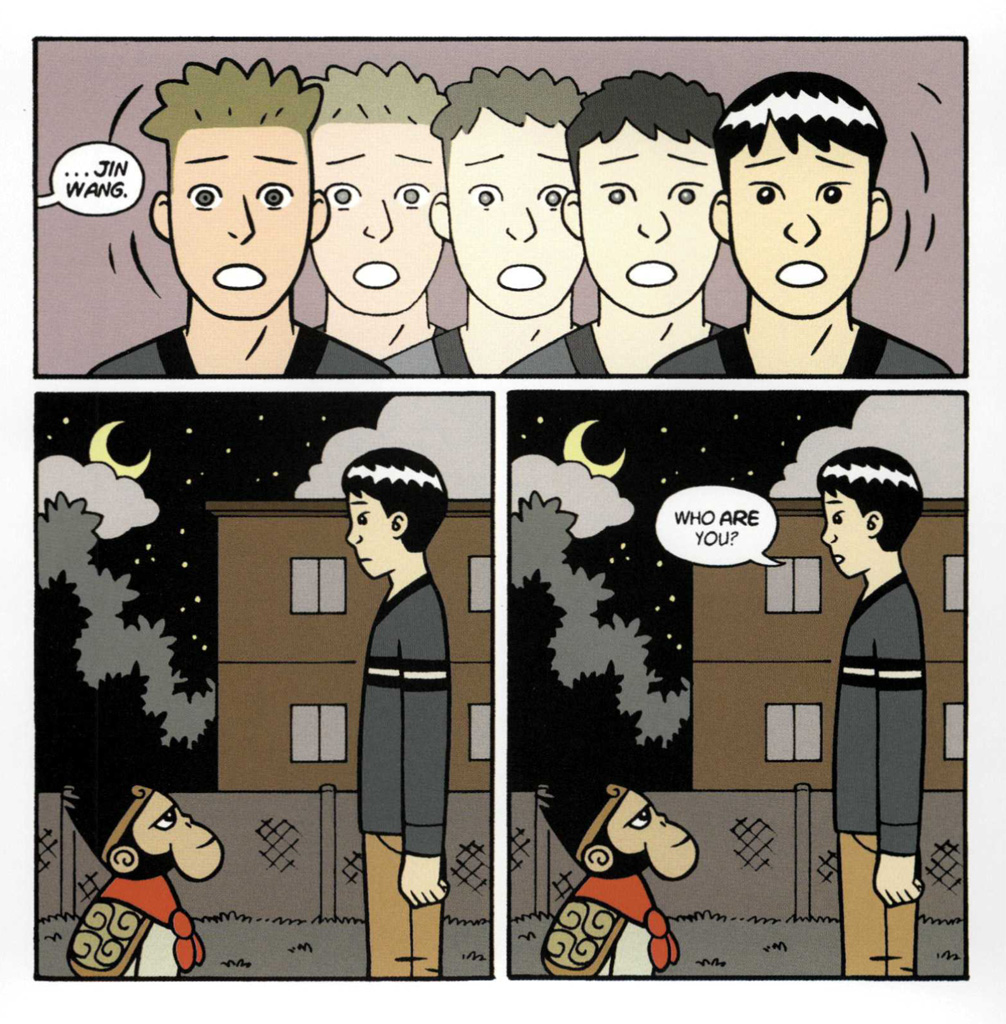
IDENTITY: Clearly, two of my boys have identity issues (but who doesn’t?). But that’s the freedom they have at this age. But what does it mean to be Chinese-American? I resonate with this question, because I am Chinese, and yet I’m not. I look Chinese, yet I don’t speak Chinese. I have Chinese family values, and yet I am also a Western individualist. I cook and eat Chinese food, but pretty much every other cuisine as well. My kids are the same. Unlike my grandparents, I don’t feel the need to preserve their Chinese-ness, and yet I want them to have a sense of what it means to be Chinese-American, especially in the diverse environment that they are growing up in. Recently, I’ve been reading through with my boys Gene Luen Yang’s Boxers & Saints, a marvelous graphic novel that approaches the Boxer rebellion from the Traditional Chinese perspective and the Catholic Chinese perspective. There’s also lots of gods, and magic, and knives, so my boys love it. I also read Yang’s American Born Chinese with my oldest – and to my surprise, he understood it’s meaning, despite not growing up wanting to be like the cool White kids. What I love about these stories is that they are both Chinese and Western. Yang offers a narrative that not only bridges those two worlds and their histories, but also brings the tensions to surface. I am resistant to the idea of imposing what it means to be Chinese-American on my boys, and story provides the freedom for them to discover that for themselves with some narrative anchors.
JUSTICE: Particularly out of my Christian convictions, I want my children to grow up being sensitive to anyone or any group that is being ignored, bullied, or singled out in a pejorative fashion–regardless of the social marker. I regularly ask them if there are people who no one wants to play with, that everyone laughs at because I want them to be the first to be their friend, to include them. Race has generally not been something I have specified as a reason to rile them to action, again, because they have not brought it up as a reason. More often, it will be because someone is smelly, or weird, or dumb, or mean (do these labels track with race, gender, or socioeconomic status? maybe/maybe not). A good friend of ours has a son who is autistic, so that is also on my radar. As they become more race-aware, you bet it will be a more intentional conversation.
If you’re parent, it’d be great to hear what’s on your mind when it comes to conveying messages and values about race to your children.
The author Beverly Tatum does something interesting in this chapter. She dives into the complexity of identity – but not merely to understand ourselves better, but as a possible path to understanding each other across the racial conversation.
Who we are, Tatum suggests, is not so straight-forward. We are multi-dimensional–e.g., I am a young, Gen X, middle class, Chinese Christian heterosexual male. But how we view ourselves is also a product of a multi-faceted process. A la Erikson, how we view ourselves results from this back and forth process between observation and reflection: All day long, I intuit what you think about me, I observe what is considered normal in the world, I observe what the world thinks about people like me — and I reflect, react, and internalize those things. So identity isn’t just this innate quality, rooted merely within myself – it is also located within my social context. How I view myself as a young Chinese man in 2013 America is very different than as a young Chinese man in 1013 China.
One of the biggest components of our self-perception, Tatum says, is our membership in either a dominant or subordinate group.
One of the interesting things she notes is that when she asks people to describe themselves, White people almost never introduce themselves as White, while people of color almost always indicate their color or ethnicity. The reason is because when we are in a dominant group, we tend to take that element of our identities for granted. When the external world already privileges this aspect of my identity – the harmony is so great that it falls back into my unconscious. On the other hand, when we are not in the dominant group – we know it. And we’ve all been there: when I walked into a room of all women, all well-dressed people, all tall people, etc. This experience of being “other” is so pronounced, that it tends to be the part of our identity that we become most aware of.
There are at least seven categories of “otherness” commonly experienced in U.S. society. People are commonly defined as other on the basis of race or ethnicity, gender, religion, sexual orientation, socioeconomic status, age, and physical or mental ability. Each of these categories has a form of oppression associated with it: racism, sexism, religious oppression/anti-Semitism, heterosexism, classism, ageism, and ableism, respectively. (p. 22)
The reality, though is that most of us belong to both dominant and subordinate groups. I am subordinate because I am Chinese, young, and (in our area) Christian (curious, in her area, it’s an advantage). But I am dominant because I am male, well-educated, middle-class, heterosexual, able-bodied, and once again, stunningly good-looking.
But to return to the contrast between dominant and subordinate groups – it’s pretty stark. Because the dominant group, by definition, sets the rules, defines what’s normal. Everyone else “is labeled as defective or substandard in significant ways” (p.22). An example that I run across frequently has to do with study habits/value of education. I’ve heard of people who bemoan how Asian parents for being “too strict” and putting “too much pressure” on their kids. Meanwhile, it’s insinuated that Blacks are “lazy” or otherwise less intelligent. Think about what is being said here. The implication is that Whites are neither too strict nor too lazy, they are, as we learned from Goldilocks: Just right. In any case, this is an example of the dominant group seeing what is “normal” as merely a reflection of themselves. (To be fair, my family was quite insistent that I never become as lazy as anyone because in their cultural mindset – their way was not only right, but normative). Another example is when men complain that women are “too emotional”. Who defines what is the right amount of emotion? The dominant group, which is men.
Of course, these are all stereotypes with only degrees of truth. But when someone in the subordinate group bucks the trend, they are merely seen as anomalies. That’s why Biden’s compliment to Obama was seen as backhanded: “The first mainstream African-American who is articulate and bright and clean and a nice-looking guy” (read: because normally you guys aren’t!).
But stuff like this shouldn’t surprise us, because most dominants are clueless – most think their experience is normative. They literally have no idea. But who can blame them when the culture and media all simply parrot back their views and values ? Subordinates are familiar with the experience of the dominants because the dominants own the culture and the media, but rarely the other way around. That’s why if you want to go mainstream, you often have to “whitewash” yourself: Blacks lighten their skin, Asians change their eyes, Jews change their noses, etc. You have to suppress your identity.
Of course, this makes many of us want to reject the dominant culture altogether – which leads to ghettoism. The negative result, Tatum says, though is that it disconnects subordinates from the networks, skills, and resources that would otherwise help improve their plight — all of which are connected to the dominant group.
And so this where even earnest race relations have often fallen apart. Earnest Whites can easily become discouraged by the charges of still being racist. Meanwhile, people of color, are still angry by how clueless Whites continue to be.
From here Tatum says that the complexity of our identities can be an asset. If you are White, she says it might be easier to understand the perspective of minorities by drawing on your own experience of belonging to a subordinate group — as a young person, female, person with disability, growing up poor, etc. If you are a person of color, you might understand that cluelessness better if you realize you too are a clueless dominant — as a heterosexual, able-bodied person, a man, or some other kind of dominant person. Tatum says of herself:
If I am impatient with a White woman for not recognizing her White privilege, it may be useful for me to remember how much of my life I spent oblivious to the fact of the daily advantages I receive simply because I am heterosexual, or the ways in which I may take my class privilege for granted. (p. 23)
In other words, perhaps the first step is to realize that both the threads of clueless dominance and helpless subordination run through all of us. None of us are exempt or immune.
The thesis of this chapter resonates deeply with me as a Christian. People often say that at the heart of Christianity is love. Actually, it’s Jesus. But yes, love is central. But so is the belief that we are all sinners. More specifically: we are all victims of sin, but we are also all perpetrators of it. I cannot decry the corruption of politicians without also being humble about the greed in my own heart. I cannot turn my nose at Miley Cyrus without implicating my own pride and insecurities. I cannot point at the speck in my brother’s eye without bumping into the plank in my own.
There are sinners on both sides of the racial conversation. As an ethnic minority here in America (but certainly not the world!) – it’s so easy to just shake my head at the majority. I was recently talking with a friend about Rick Warren and also the Exponential Conference – and he said something that startled me: Most white people just don’t get it. That may or may not be true. But the Cross of Christ reminds me: I am a clueless sinner too. This does not negate the sins of the majority. In fact, I believe the Cross puts the onus on the dominant – not the subordinate; reconciliation and love, in light of Christ crucified, is always the ethical responsibility of the strong, not the weak. But even so, the Cross still stunningly calls me to humility and patience. Ponder this long enough and you’ll realize how offensive, yet radical this is.
Personally, I think the Cross takes us much further than Tatum does, but it seems promising that it’s in the same direction. Because my interest in this topic is not to stoke racial animosity or pride – but in seeking racial righteousness in the Church, and peace in the world.





 Brian Hui