Reflections: Why Are All the Black Kids Sitting Together in the Cafeteria? – Ch.1

I’ll admit that race & ethnicity is something that I’ve only thought superficially about.

This might be surprising considering that I was born and raised in a rather diverse neighborhood; my playground friends were Filipino, Chinese, White, Hapa, Indian, Vietnamese, and Japanese (for some reason never became friends with my Latino & Black classmates).  There was racism growing up, but there was also just friendship.  This might also be surprising since I am a son of Chinese immigrant parents.  Which meant that I led a dual life — outside the home:  an assimilated American life (albeit hodge-podge); inside the home:  a HK/Toisan family life.  Sometimes the transitions were seamless; sometimes it was awkward and embarrassing.  And lastly, because I pastor a predominantly Asian American congregation — and I also teach Christian ethics.

I can spend a whole post analyzing why this has been the case.  But it’s enough to say that over the past few years, I’ve been experiencing a shift.  A shift as a Chinese American within this world.  Within the broader circle of the American Church.  And shifts – that I attribute to God’s Spirit and the prompting from friends – within my heart.  My reading of this now classic book is part of catching up to this shift.

Image

Beverly Tatum, the author (and a psychologist & professor), begins with the provocative title:  Why Are All the Black Kids Sitting Together in the Cafeteria?  I remember when I first saw this title, I was reminded of a recent time when I was talking with a fellow believer who is White – she not so subtly criticized our church:  Why aren’t you guys more multi-ethnic?  Why do Asians always stick together?  And that question both incensed me, but also made me wonder as well.  It is an honest question.

In the opening chapter, Tatum begins with a question one of her White students once asked her:  “Oh, is there still racism?”  She was startled by the naïveté.  But at the same time, it made her recognize that conversations about race and racial identity cannot begin unless we are able to ask honest questions.  Whites can often feel afraid or defensive.  Peoples of color (her term) can often feel angry, helpless, or also afraid.  So honesty is crucial.

But so is truth and clarity.  And the reality is that racism in our country is real.  Some of us just don’t recognize it because, as Tatum puts it, it:

Cultural racism—the cultural images and messages that affirm the assumed superiority of Whites and the assumed inferiority of people of color—is like smog in the air. Sometimes it is so thick it is visible, other times it is less apparent, but always, day in and day out, we are breathing it in. None of us would introduce ourselves as “smog-breathers” (and most of us don’t want to be described as prejudiced), but if we live in a smoggy place, how can we avoid breathing the air? (Kindle 300-303)

So racism isn’t just “in” the individual – it is embedded into the relational and structural systems of our society.

Tatum begins by defining racism.  From David Wellman, she defines racism as a system of advantage based on race.  Meaning, it’s not just prejudice.  I found this point to be particularly profound.  Because again, racism is not just about how you and I view other people – also the system in which we live.  But also, racism isn’t just about prejudice – it is especially about how these prejudices consistently advantages one race over others.  The most telling example came from an article:  “White Privilege:  Unpacking the Invisible Knapsack.”  The white female author, in the article, rattles off a long list of societal privileges that she has received simple because she is White – privileges she neither asked for nor earned:

Of course she enjoyed greater access to jobs and housing. But she also was able to shop in department stores without being followed by suspicious sales-people and could always find appropriate hair care products and makeup in any drugstore. She could send her child to school confident that the teacher would not discriminate against him on the basis of race. She could also be late for meetings, and talk with her mouth full, fairly confident that these behaviors would not be attributed to the fact that she was White. She could express an opinion in a meeting or in print and not have it labeled the “White” viewpoint. In other words, she was more often than not viewed as an individual, rather than as a member of a racial group. (Kindle  343-348)

Wow.  This immediately drove me to consider all the privileges that I have been unwittingly been afforded because I am male.  Yes, people may have prejudices against me because I am male (he’s such a typical guy) — but the system of our society, on the whole, does not advantage women/disadvantage men on the basis of sexist prejudices, but the opposite — almost every time.

Moreover, I have, for the most part, been unaware of how our society is set up for my advantage as a male (who is also well-educated, heterosexual, able-bodied, middle-class, and of course, stunningly good-looking).  Sexism that benefits me as a male is simply part of the smog-filled-air that I breathe.  Hence, only males can truly be sexist.

And this answers the understandably honest question:  Are only Whites racist?  Because most Whites abhor the image of Klansmen, skinheads, or Archie Bunker.  This question is usually understood as, “Are you saying all Whites are bad people?”  To which she says, of course not.  But she still says, provocatively, that only Whites can be racist.  And the reason goes back to the definition of racism.  Blacks and Latinos and Native Americans and Asians can and are prejudiced (trust me, we are).  But the system of our society does not offer preferential treatment based on those prejudices.  “Despite the current rhetoric about affirmative action and ‘reverse racism,’ every social indicator, from salary to life expectancy, reveals the advantages of being White” (Kindle  338-339).  This is where I plug, once again, comedian Louis CK’s brilliant bit on how he loves being white and even better bit on how great it is for his two White American daughters.  Anyone can be prejudiced.  But only certain prejudices lead to any advantage.  And people of color, instead of Whites, are almost always on the short end of that stick.

Image

My only quibble with Tatum is that while this is most definitely true nationally and even regionally, I have generally tended to think that our lives are most affected locally.  What is true in one enclave, ghetto, or barrio may not always mirror what’s true nationally.  I’ll just say it:  Blacks won’t do too well in Chinatown.  Latinos might not fair too well in the Hood.  But for the most part, I think her point holds true.  Even where there are areas where the local system consistently disadvantages Whites, it’s hard to imagine that they constitute a majority.  More common are places where Whites, while still comprising the minority, still hold the majority of the power, privilege, and advantage.

In any case, Tatum says this question misses the point.  The point is what will Whites do with racism?  She compares racism with those conveyor belt style walkways at the airport — by default, it moves you forward in a direction towards White advantage (i.e., racism).  So the question isn’t simply are you racist, but will you be actively racist (walk or run forward on the belt), passively racist (just stay on the belt, passively going along with things), or be actively anti-racist (move in the opposite direction)?  While I saw her point about Whites and racism, I found myself wondering where I stood along this continuum.  I think most of us, regardless of color, are just passive, period.  This is not good as a human being.  This is inexcusable as follower of Christ.

Tatum closes with a final distinction between racial identity versus ethnic identity.  Race is a distinction we’ve made up on the basis of physical criteria–usually color; race was also originally created in the service of oppression.  Ethnicity is a distinction based on cultural criteria–e.g., language, customs, food, shared history.  So, for example, our Asian American church (mostly Chinese, but includes Korean, Japanese, Filipino, and Vietnamese, and White) is predominantly mono-racial, but multi-ethnic.  A helpful distinction that I suspect will come up again.  I’m looking forward to the next chapter where she explores the complexity of racial identity.
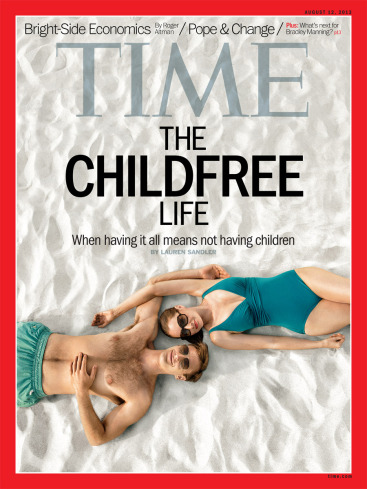
Children: To have or not to have. Is that the question?

Image

TIME Magazine recently featured an article about couples who choose to go on without kids.  It’s caused quite a stir.

I’m sure I could weigh in – I am, after all, a father of 3.  But I think the article serves more interestingly as a sociological piece. Our world would seem so strange to the ancients – or even to those in developing countries.  Whereas they viewed children as a gift you hoped for, susceptible to early death, and also a means to economic security…we view children as a human choices made in our plan, objects of our medical-technological control, and a trade-off with our economic mobility.  This is generally true regardless of how many children we do or do not have.

In any case, I think you can have some pretty horrible reasons for not having kids – just as you can for having them. And of course, there are some pretty glorious reasons to go one way or the other as well. And still, there are those of us who have kids by ‘accident’; others who cannot no matter what we try (both instances betraying the modern notion that children are mere products of our will).

Seems to me that our station in life is important, but it’s not always clear which is inferior or superior. What seems most important though is, having found our station, how we choose to live within it. If we’re ever going to be judged, I suspect it will and should be for that.

This is especially true for those of us who are Christians.  The Apostle Paul teaches us that marriage is relativized in light of eternity (spoiler:  there will be no marriage in heaven).  Jesus subverts the sanctity of marriage, children, and family when he asserted that his family was not necessarily biological, but spiritual–i.e., those who do the will of my Father.  Our “life stage” (that whole concept is demolished not only in modern thinking, but in view of the resurrection when we should no longer assume that every single person should get married, or that every married couple should have children, etc.), or station in life, as the ancients called it, is a present reality and of real importance.  And yet it is not of ultimate importance.  That’s why Paul could have the guts to say something as blasphemous as, “Those who are married should live as they were not.”  If we were to follow that logic, we should also say, “Those who have children should live as they did not.”  Being married isn’t better than being single, nor is having children better than not (although – most people still would prefer to be married and have children; it’s natural).  What matters most is how, as a married person, or a parent, we give ourselves wholly to the Lord.

But if we take Jesus seriously, we could even say, “Those who are single or childless should live as if they were not.”  Because our fathers, our mothers, our brothers, our sisters, our children aren’t biological but spiritual–those who do the will of our Father.  Even if I am single – by choice or not – I am called to belong to and sacrificially love God’s family.  Even if I am childless – by choice or not – I am called to care for “the least of these” and to make disciples, that is bearing spiritual children.  Being single or childless means a large measure of liberty (although with loneliness mixed in), but the question Jesus and Paul would ask us is:  What are we doing with that liberty?  Are we living for YOLO?  Or are we living for YHWH?  (please don’t roll your eyes).

And this is where we, as Christians, must diverge from the contemporary ideas about marriage, children, and family.  Our goal isn’t supposed to be personal fulfillment or self-actualization.  Having children merely to make us happier is as evil as not having children for the same reason; because while either path can make us happy, regardless of the path, we are called to service, not to self-gratification.  And children are not a means (or an obstacle – although Jesus says we adults can be one for them), they are human beings made in the Image of God, people whom we must continue to love and nurture even when their ability to make us happy diminishes.  And so as followers of Jesus, while I think we can weigh in on topics like these, the most important question isn’t IF we should do this or that, but HOW.  The goal isn’t personal fulfillment, but living wholly unto the Lord, offering our lives as living sacrifices to God – regardless of what kind of station we find our lives in.

3 Kids More Expensive Than I Thought?

In my last couple of posts, I wrote about having three kids.  And this just came out…

The Economic Policy Institute (EPI) just released regionally-based adjustments on the Federal poverty line.  I don’t know much about the EPI; I’ll leave it up to you whether you agree with their definition of basic standard of living: “the income a family needs in order to attain a secure yet modest living standard by estimating community-specific costs of housing, food, child care, transportation, health care, other necessities, and taxes.”

What really caught my attention was how much BIG the cost jump was to three kids versus the jump to having two kids.  For example, the cost of raising a family in the SF East Bay:

3 kids:  $92k
2 kids:  $75k
1 kid:  $69k

The difference between having two kids versus one:  $6,000.
Jump from two to three kids:  $17,000.  The EPI estimates it costs three times more.  

Now I generally ignore these sorts of things because people are always getting freaked out about whether or not they can afford to have kids.  Some people have a legitimate concern their.  But most people who read and write these sorts of articles can probably afford to have kids — they’ll just have to (*gasp*) make some sacrifices.

But what caught my attention was the massive jump from two kids to three.  That seemed rather incredible to me.  But then I reflect on our experience…

  • upgraded to minivan; literally could not fit 3 carseats in the back of our sedan
  • prolonged the number of years we needed childcare (my wife thereafter reduced to part-time, which in a sense is a “cost”)
  • we were blessed enough to already have a place large enough – but if we were in a 2-bedroom place, we could obviously make do with 3 kids, but an upgrade would certainly make sense (actually, with the massive dip in interest rates over the last few years, our housing costs have actually decreased).

Even with the above, I’m kind of scratching my head on this one…

How Do You Do It With Three Kids?

My previous post, inspired by Laura Meehan, seems to have stirred some interest.  Enough to somehow end up on Reddit.  Some have mistaken that I disagree with Laura; I don’t one bit.  I just wanted to fill out some of the positives to having three kids.  It is crazy hard, yet it also also crazy awesome.  But at the end of the day, you’ve got to choose for yourself — or you don’t choose, but you learn to roll with the punches.

In any case, given the interest in the topic, I thought I’d reprise an old post in response to the most common question my wife and I get asked:  How do you do it?

I like Laura’s answer:  There’s no magic.  It’s hard.  You mess up.  But you just do it.

My answer’s not all that different:  We work hard at it.  But more so, we’re incredibly blessed.

—————————–

How Do You Do It With Three Kids?

January 26 2011, 10:29 PM  by Brian Hui


Painting by Donny Hui, my brother.  No, we don’t have four kids.

The most common question/comment my wife and I get  is, “I don’t know how you guys do it with three kids.  How do you??”  And at first, since most people we knew were still childless, it was, frankly, an annoying question.  And it’s not because I mind the question, but the underlying vibe I got from most folks was that we’re crazy for having three kids; we’re freaks.  Or there was this sense that kids are such hassle, a burden, almost like asking how we could manage to have our lives so ruined.

But now that more and more of our friends are having kids, especially for the first time, the question sounds different.  It sounds more like true curiosity, maybe even a little bit of exasperated wonder.  And so I thought I’d share a few thoughts on “how we do it” — at least some thoughts that come to mind immediately.

But first a couple caveats.  First, I don’t think we’re heroic for having three kids — so there’s nothing self-congratulatory going on here.  My grandma had 7 kids (that survived) and emigrated with her whole family out of communist China to Hong Kong and eventually here to the States.  That’s heroic.  Second, what follows is descriptive and not prescriptive.  And now on with the show…

We both come from families three.  So it might seem a lot to some people.  But it feels perfectly normal for us.  Weirdos like us can be surprisingly well-adjusted when we think we’re perfectly normal.

We have loving & helpful parents who live close by.  The difference this has made cannot be overstated.  My sister-in-law’s family, for example, lives far away and they don’t have anything close to the support system that we do; so it’s much harder.  Also, our parents love taking care of our kids.  A few of my friends have parents who prefer not to babysit; that also makes it harder.  Now, this doesn’t mean we just drop them off and subcontract out our parenting to them – – although my mother-in-law does help babysit during work hours.  But we do spend a fair amount of time with them.  And whenever there are multiple adults around, caring, feeding, bathing, playing with our kids is always much easier.  And of course, during the rare times when we do need to run an errand or go on a date, we have the grandparents to depend on.

We’ve created pretty efficient routines.  No, not everything is color-coded, pre-packaged, or automated.  But between getting-the-kids-ready-in-the-morning rituals, getting-out-of-the-house rituals, to washing-them-up-and-putting-them-to-sleep rituals, my wife and I have our roles pretty down pat (sometimes there’s still hiccups).  And they also know that if they slow things down, they’ll get in trouble.

Our kids are flexible sleepers.  They can sleep anywhere; they’re not too fussy about that.  They can also sleep late if we’re hanging out with friends (although less so now that Caleb’s in school).  It’s not that we “trained” them, but we’ve always just brought them along and I guess they’ve always just been used to it.

I am half as strict as Amy Hua.  Which means I am strict as hell.  Three isn’t freakishly large, but three is still a crowd.  And we’ve put a lot of discipline into the front end of their childhood so that all the basics — cleaning up toys, eating together at the table, washing up, going to sleep, listening to voice commands, etc. are mostly down (keyword:  mostly).  And once we had the basics down, home life (and even life outside the home) isn’t nearly as frenetic as it could be.

I employ crowd control strategies.  There’s two of us, three of them.  Much of the time, there’s one of us, three of them.  And if we were to try to chase down, or get the attention of each child one at a time, it’d be nearly impossible and we’d go nutz.  So I’ve found ways that I can get all their attention at once and can corral them all like cattle.  I’ve figured out how to have fun with all of them at the same time — whether it be wrestling, going to the park, story time, etc.  And for much of the time, if one person gets in trouble, they all get in trouble.  Yeah, that latter one sounds unfair…because it is.  But it also teaches them the consequences of fighting, trains them to negotiate and resolve things on their own, reinforces their bond as brothers, and most of the time, it really is everyone’s fault.

We still value each child and know what makes them tick.  No, we don’t go on special outings with each child like Jon and Kate did — although I did take Evan to DC this fall.  But we know when someone needs a hug, a break, or just some extra attention.  We know what their favorite foods and activities are and we’ll eat and do those things together; an added bonus to that is that they learn to enjoy those things with each other.  We know what they’re afraid of, the things they can and cannot do.  And while we have common expectations across the board for all our kids, we also know that there are just some things that are peculiar and probably unbendable about each child.  Why is Caleb so competitive, Evan so moody, and Dylan so fat?  We don’t know, that’s how God made them.  And we love them as they are and work with what we have.

We are lazy.  We admit it.  We use the TV, Netflix, Wii, iPod, iPad, etc. when we’re too tired or when they get too MMA with each other.  We also have a DVD player in our minivan.

Everyone has a role.  Running a house is like running a business.  And since I’m Cantonese, I am a firm believer in child labor.  So whether it’s cleaning up, setting up the table, fetching things for mom & dad, kitchen prep, or simple laundry, we keep them involved in the family chores.  It teaches them responsibility, but we also just need the help.

We hang out mostly with friends who are good with our kids.  This wasn’t a conscious choice.  But we’ve always thought of ourselves as a package.  So if you like hanging out with our kids, can be patient with their volume, and like playing with them too — well, we’re gonna naturally be that much more likely to invite you over.  It’s more fun to hang out with you and, to go back to the adult:kid ratio, the more (helpful) adults around, the easier it is on us.

We genuinely believe children are a gift to be received with wonder and gratitude, not an intrusion into our lives.  I know that sounds way holier-than-thou.  Maybe it is.  But if your primary disposition towards kids is that they’re troublesome, require too much sacrifice, etc…well, obviously having more kids feels that much more of a burden.  But even though they can be a handful at times, we don’t think that they’re in the way of us leading a happy, meaningful life.  Kids are not the antithesis to our dreams.  At the same time, our kids in and of themselves are not the objects our dreams.  My wife and I got married, dreamed big, and our kids are just along for the ride.  We just have to make more room for them.

The grace of God.  At the end of the day, my wife and I were mostly naive about having kids.  We never thought it would be daunting, and so maybe for that reason, it hasn’t felt daunting.  But it’s probably mostly because God has always given us everything we’ve needed — beginning with the first, then second, and now the third son.

So, You Would Like to Have Three Children: A Non-Rebutting Counterpoint

LAURA MEEHAN AT THE SHORT-WINDED BLOG recently wrote a rather exasperated yet hilarious post about the ardors of having three children.

I regularly speak with people who have zero children, or one child, or two children. And they tell me they might consider or would like to have three children. My first impulse, I will own, is to bark, “No, you don’t want three kids.” But that is not helpful, I know this.

Let me first say in her defense: Everything she writes is true. She writes about the juggling, the tiredness, the constant shouting, the unhelpful comments, etc. Reading her post made me realize that for those of us who have 3+ kids, our normal is most people’s crazy. And since I have 3 growing boys, I would even add to her list of demerits that we are soon approaching the day when our grocery bill will outpace our mortgage. Extracurricular activities and travel require gifts of creativity and frugality because everything is x 5. Eating out is rarely relaxing (even with our shameful use of electronic babysitters).

That notwithstanding, however, I think she gave short shrift to the picture of the beauties, the plusses, the shear awesomeness of having 3 kids. Again, not to negate what she said – but the pleasures of parenting x 3 are equally real, experienced in what sometimes feels like cacophony, but many times like harmony.

SO HERE IS MY NON-REBUTTING COUNTERPOINT. These are the reasons why I love being a father of 3, and why I think you ought to consider stop freaking out about it…and just…do it.

  • Band of Brothers – This is also because they’re all brothers and all close in age, but my boys are very close to each other. They love each other, they watch out for each other, and they do everything together. Sure they are constantly invading each other’s space (often times in each other’s faces), but it goes both ways: the same impulse to steal each others toys is the same impulse to crawl into each other beds. Because even at an early age, they understand that a cord of three strands is not easily broken. And what parent feels anything less than joy knowing that? . .
  • Every Part Belongs to the Body – Yes, the dishes and laundry and cleaning are NEVER truly done. An extra dishwasher and washing machine would hardly feel like a luxury (first world problems – I know). And what this means is that for my wife and I: We cannot do it all. But instead of being a point of exasperation and self-absorbed guilt, we see this is an opportunity to involve our kids even at an early age – teaching them that they have a role in the family. That family isn’t about you or me, but us. But in order for us to function, your help is not only appreciated, it is needed. So yes, raising 3 kids is a lot of work, but as they’ve gotten older, they’ve also grown more helpful. Just yesterday, my 4 year old cleared the floors, my 6 year old mopped the kitchen, and my 8 year old vacuumed the carpets – including the stairs! And that not only helps with the load, but it’s also formative. Learning to help out as early as 2 years old (all our kids are 2 years apart – no, we didn’t plan that) has taught them selflessness and responsibility. Which, looping back, benefits all of us in the home. . .
  • Buffer – Living in a full house actually means that there is more, not less social flexibility. We are a house of both extroverts and introverts. If one of us wants company, there’s always someone to hang out with. But if one of us wants to be alone, we don’t have to worry about leaving anyone alone; there’s always 3 other people to hang out with. There’s rarely a need to feel left out or overwhelmed (well, okay, when the 3 boys really start going at it, it can get overwhelming, but that’s when we just close the door – or I resort to one of my creative Chinese disciplinary measures). But come over and you’ll find that some hours are pretty raucous; but other times, each person is just playing quietly in their own corner of the house. And that works for us. . .
  • Babysitting with Ease – Especially now that they’re older, taking care of my kids (or asking others to) is fairly easy. Easy you say? Well, just watching 1 child can actually be pretty taxing – you can often times feel the pressure to keep them entertained and out of trouble. But with 3, that’s no longer the case. Sure, there are more mouths to feed and when things get out of hand – it compounds rather quickly. But with 3, they’re never bored. They entertain each other. I’ve had to watch my kids while working for a good chunk of the last couple months – and while it’s easier not having to watch them, watching all 3 has always been more preferable to only watching 1. . .
  • Moral Authority – Often times those with 1 or 2 kids will look at us and say stuff like, “I don’t know how you guys do it. I can hardly manage 1!” And then they go on to list all the things that make their kid/s especially difficult. And many times I just want to interject with some of my own thoughts (e.g., There’s no magic; we just do it). But usually I don’t. But it feels good to know that I could. And when I do — well, it’s not like I know nothin’. ..
  • Fun – Playing with my 3 boys is fun. Most board games are made for 4 people. Many video games can now accomodate 4. Two is sufficient for wrestling, but 4 is more fun. Riding bikes, going to the park, making pancakes on Saturday mornings as a group is more fun. Even telling jokes and funny stories over dinner is more fun with a laughing chorus of 5 versus 3 or even 4. For us, the more has truly been the merrier. . ..

SO, YOU WOULD LIKE TO HAVE THREE CHILDREN? WE DID. So did our parents. And we love the fullness of our families. Now obviously, I don’t think we should be flippant about having kids. Kids are a gift as much as they are a trust from God. And yes, parenting is hard – that’s just the way it is. But sometimes we make it even harder with our own bad press. Yes, kids are a source of stress and exasperation (c.f., Laura), but they are equally a source of joy and help. Amen?

NOTE:  Some people have mistaken this post as a rebuttal to Laura’s post.  Just to reiterate, it’s not.  This is a NON-REBUTTAL.  I completely agree with what she wrote.  Having kids is hard – having three is even harder.  I could probably write an equally long post documenting just some of my recent travails – especially since we’ve been sans babysitter for the last 3 months (i.e., working from home).  But while I think the stress and madness are real — so are the joys and, I dare say, benefits.  So please don’t read this as a rebuttal to Laura’s post, but in tandem.  I don’t expect everyone to agree (everyone’s experience is different), but this has been our experience, for both my wife and I.

Some people have also said that my kid are older and our experience gives them hope.  I’m glad for that.  It has definitely gotten easier – especially after our youngest got out of diapers.  Press on parents!  And if you wanna hear about how we’ve made it through these years:  I’ve written about that too.